
 Tom Grace was part of an Army Ranger unit that liberated more than 500 prisoners from Cabanatuan, Philippines. (Photo by Patrick Dennis, used by permission of The Advocate, Baton Rouge, Louisiana)
By George Morris
When Army Gen. Douglas MacArthur made good on his promise to return to the Philippines during World War II, Tom Grace’s initial role in the invasions turned out to be uneventful. But it didn’t stay that way.
Grace, a New Orleans native and long-time Baton Rouge resident, was part of a dramatic 1945 raid behind Japanese lines that freed more than 500 Allied prisoners to prevent their being massacred by their captors. A force of just 121 Army Rangers and two groups of Filipino guerrillas marched 30 miles behind enemy lines, where they were vastly outnumbered by the Japanese military.
“What we were going into, we were either going two ways or only one way, because we’re not going to come back until we get them out,” Grace said. “That’s what we went in with on our mind.”
 Arthur W. Ward during flight training in World War II. (Photo provided by Deborah S. Ward)
 This flag, on display in the National Museum of the Pacific War in Fredericksburg, Texas, was made by prisoners of war held by the Japanese and is similar to one made by POWs held in Davao, Philippines, and Toyama, Japan, during World War II. (Photo by George Morris)
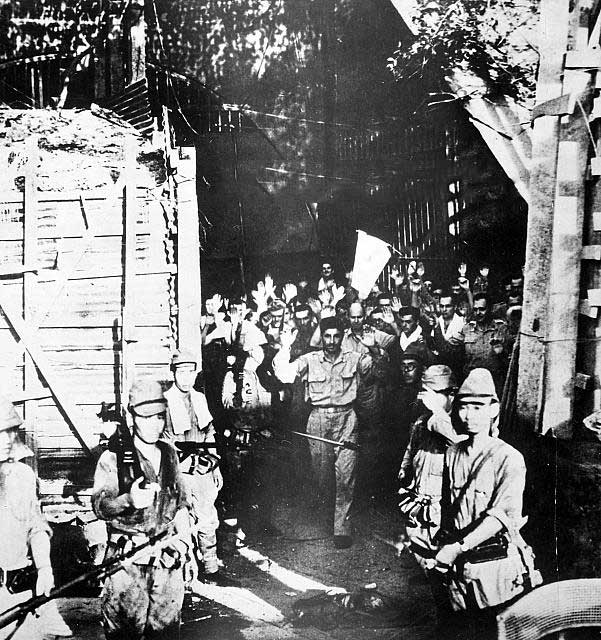 U.S. forces in the Malinta Tunnel surrender on Corregidor.
 WW2: The Big One