
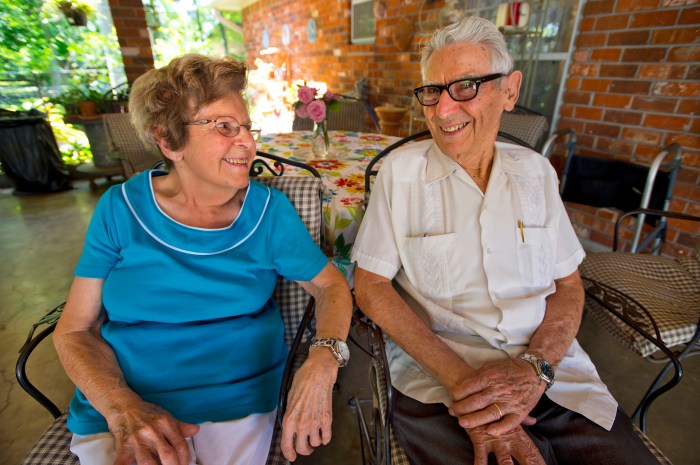
 Siblings Marie Jorda Jones and Gerald Jorda saw their country, France, occupied then liberated during World War II. (Photo by Travis Spradling, used by permission of The Advocate, Baton Rouge, Louisiana)
By George Morris
When anniversaries of the end of World War II in Europe — or V-E Day — come around, it’s an abstraction for most Americans. Not for Baton Rouge, Louisiana, siblings Marie Jorda Jones and Gerard Jorda.
Both were teens in northern France when the war came to their country in 1940. By the time it ended, Marie was engaged to an American. In between, they endured an occupation that turned them into refugees for more than two years.
 Irma Darphin served as a nurse in Europe after the Normandy Invasion. (Photo used by permission of The Advocate, Baton Rouge, Louisiana.)
 Lenton Sartain, part of the 82nd Airborne Division’s 319th Glider Field Artiller Battalion (Photo by Patrick Dennis, used by permission of The Advocate, Baton Rouge, Louisiana)
 Gen. Dwight Eisenhower celebrates the end of World War II in Europe by holding the pens used to sign the surrender document. (Public domain, National Archives)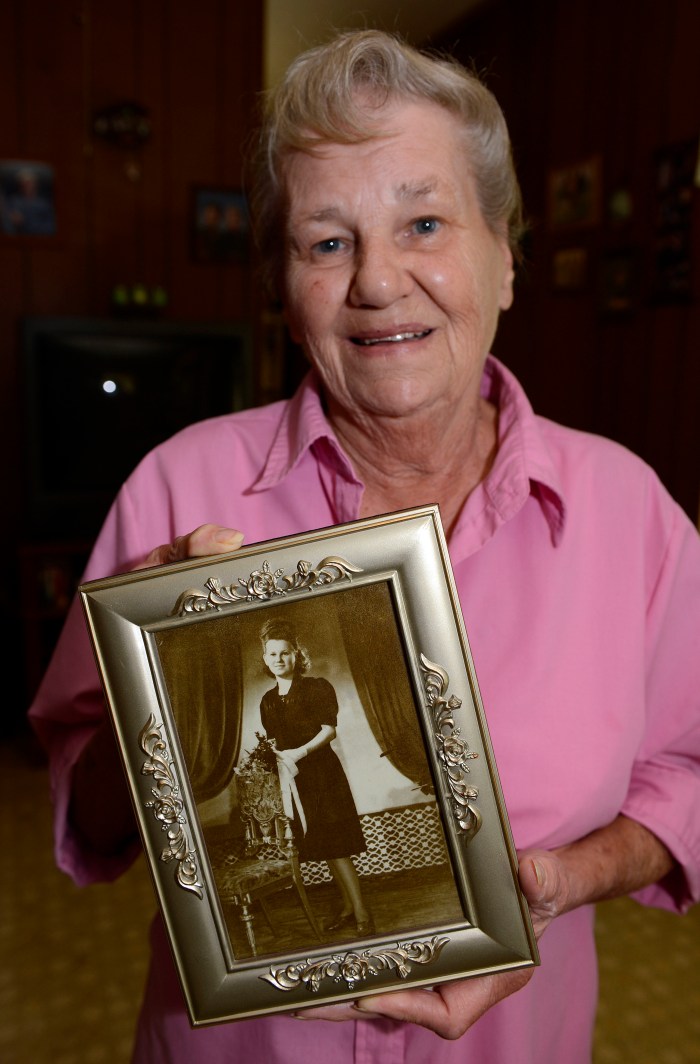
 Nolan Ruiz, left, and Mervin Medine knew each other in elementary school, and it was Medine’s unit that liberated Ruiz from captivity near the end of World War II. (Photo by Travis Spradling, used by permission of The Advocate, Baton Rouge, Louisiana)
 Robert Black fought with the 10th Mountain Division in Italy. (Photo by Bill Feig, used by permission of The Advocate, Baton Rouge, Louisiana)
 Tom Grace was part of an Army Ranger unit that liberated more than 500 prisoners from Cabanatuan, Philippines. (Photo by Patrick Dennis, used by permission of The Advocate, Baton Rouge, Louisiana)
 Arthur W. Ward during flight training in World War II. (Photo provided by Deborah S. Ward)
 WW2: The Big One