
 Arthur W. Ward during flight training in World War II. (Photo provided by Deborah S. Ward)
By George Morris
As the United States neared its entry into World War II, the world wondered whether England would fall to German bombs or the Soviet Union would fall to Nazi troops.
For much of black America, though, attention focused on the small, East Alabama town of Tuskegee. There, a racial barrier was falling.
Of blacks’ numerous contributions to Allied victory, perhaps none is as compelling as the story of the Tuskegee Airmen. Resisted by the American military at home and enemies abroad, they advanced the civil rights struggle in an area where many doubted they could succeed — in the skies.
Although the airmen’s names are seldom mentioned in war history, Baton Rouge resident Arthur W. Ward knows them well. Ward, a retired Southern University professor, went through wartime pilot training there.
Continue reading “Tuskegee Airmen”
 A.C. Thomas recalls crossing the Rhine River over the Ludendorff Bridge, which German defenders had failed to destroy, with the U.S. 9th Armored Division. (Photo by Travis Spradling, used by permission of The Advocate, Baton Rouge, Louisiana.)
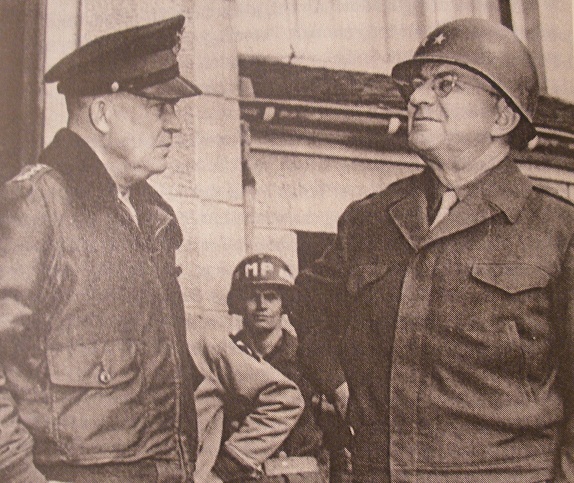 Gen. Troy Middleton, right, with Gen. Dwight D. Eisenhower
 Tom Hollimon (Photo by Arthur D. Lauck, used by permission of The Advocate, Baton Rouge, Louisiana)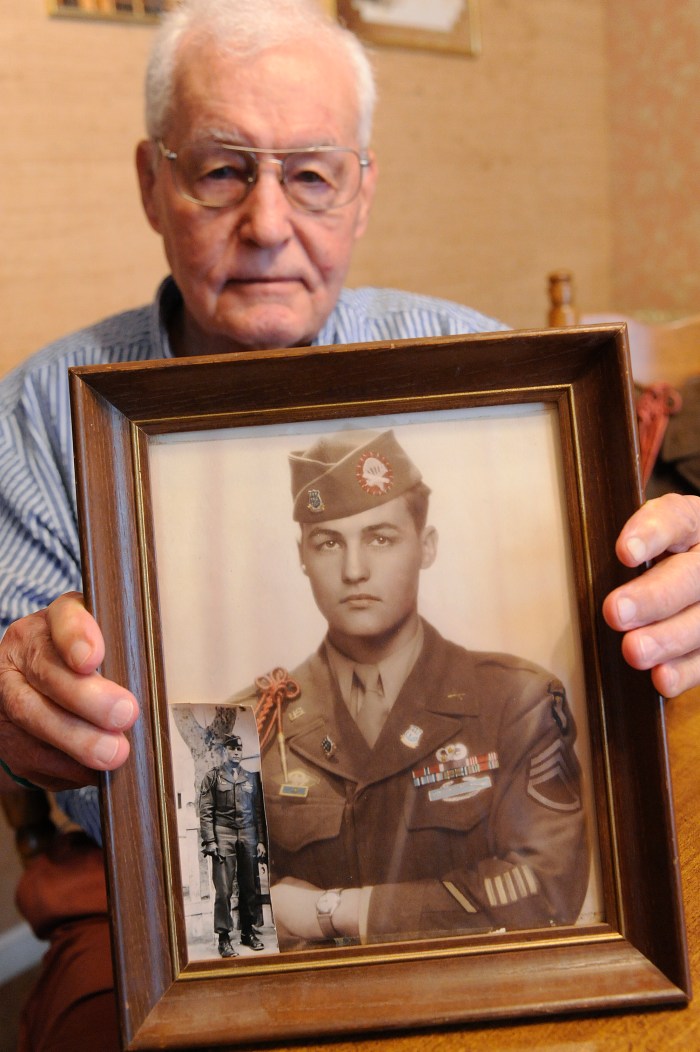
 This flag, on display in the National Museum of the Pacific War in Fredericksburg, Texas, was made by prisoners of war held by the Japanese and is similar to one made by POWs held in Davao, Philippines, and Toyama, Japan, during World War II. (Photo by George Morris)
 Gen. Dwight Eisenhower speaks with paratroopers shortly before they board airplanes taking them into Normandy on D-Day. (National Archives)
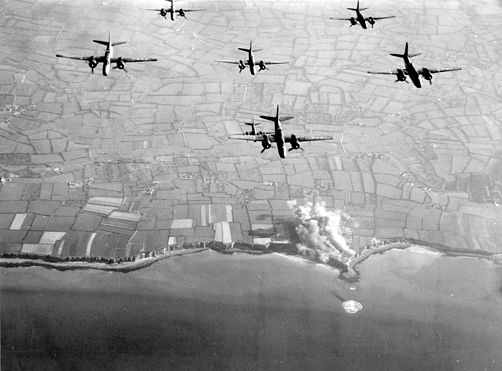 Bombers attack Pointe du Hoc in advance of D-Day. (National Archives)
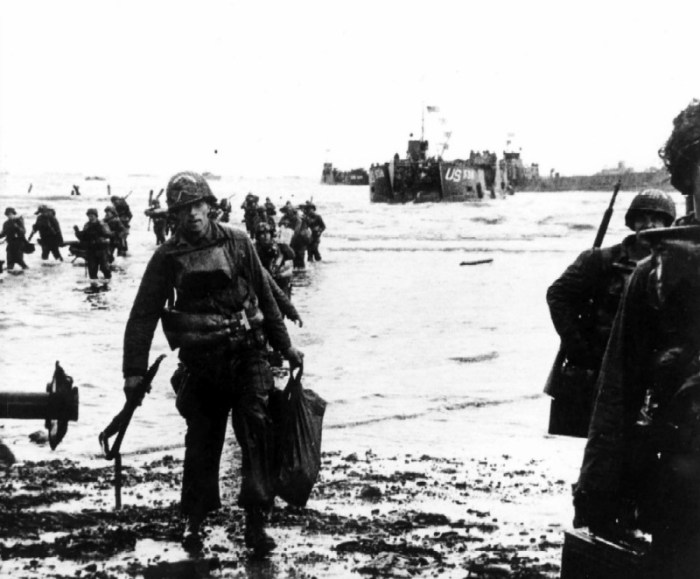 Soldiers come ashore on Utah Beach on D-Day (National Archives)
 WW2: The Big One