
By George Morris
Most Americans remember World War II through the eyes of veterans who fought, families who awaited their return, or from movies produced from the victors’ point of view.
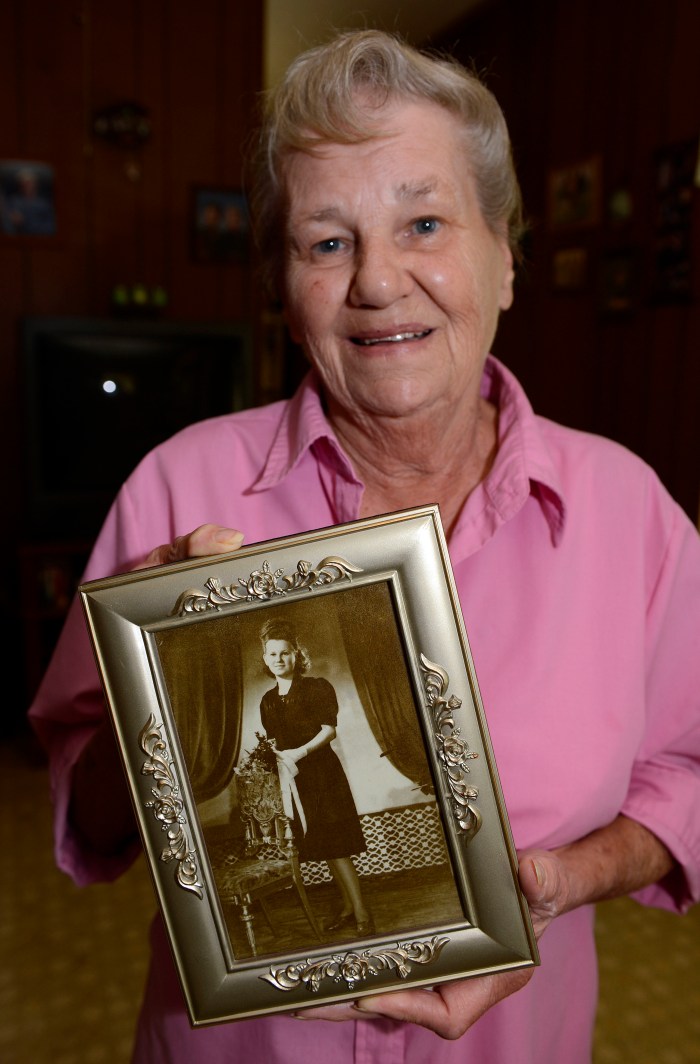
Eva Rieseler Bardsley had a different vantage point.
Bardsley grew up in Berlin and was 12 years old when Germany’s surrender in 1945 ended the war in Europe. She saw her city turned to rubble, was bombed out of her home three times and separated from her family for more than a year. She struggled to avoid starvation and rape in the chaos of war’s end.
“I should have folded up,” said Bardsley, a longtime Watson, Louisiana, resident. “But I really had a good outlook on life, and even those times as a little girl, I always hoped and prayed there was a better time coming.”
 Nolan Ruiz, left, and Mervin Medine knew each other in elementary school, and it was Medine’s unit that liberated Ruiz from captivity near the end of World War II. (Photo by Travis Spradling, used by permission of The Advocate, Baton Rouge, Louisiana)
 Robert Black fought with the 10th Mountain Division in Italy. (Photo by Bill Feig, used by permission of The Advocate, Baton Rouge, Louisiana)
 Tom Grace was part of an Army Ranger unit that liberated more than 500 prisoners from Cabanatuan, Philippines. (Photo by Patrick Dennis, used by permission of The Advocate, Baton Rouge, Louisiana)
 Arthur W. Ward during flight training in World War II. (Photo provided by Deborah S. Ward)
 A.C. Thomas recalls crossing the Rhine River over the Ludendorff Bridge, which German defenders had failed to destroy, with the U.S. 9th Armored Division. (Photo by Travis Spradling, used by permission of The Advocate, Baton Rouge, Louisiana.)
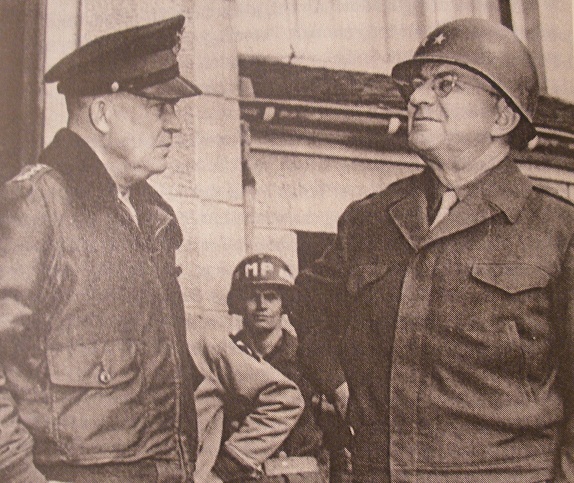 Gen. Troy Middleton, right, with Gen. Dwight D. Eisenhower
 USS Shaw explodes during the attack on Pearl Harbor, Dec. 7, 1941 (National Archives)
 WW2: The Big One